Marketing · 6 min read
MLS Photos vs. Professional Real Estate Photography
Short answer: photos don't sell a house, but they decide whether anyone asks to see it. That's the whole mechanism, and it's worth being precise about.
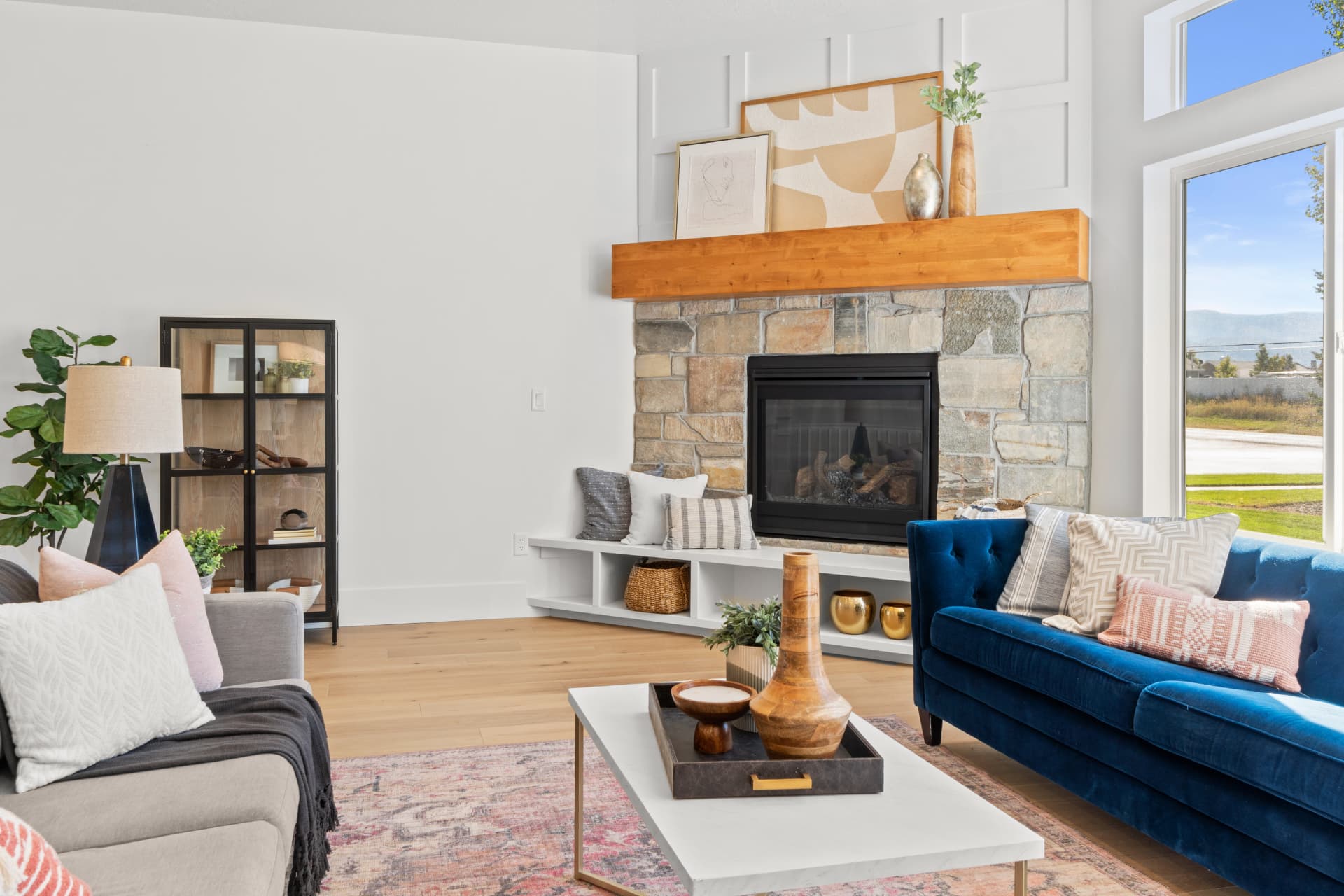
The photos are the first showing
Almost nobody requests a showing before looking at a listing online. The gallery is where a buyer decides whether this address is worth an hour of their Saturday, and that decision happens on a phone screen, in a scroll, against a dozen other listings in the same price band.
That reframes what the photos are for. They aren't documentation for the file — they're the tour that happens first, for far more people than will ever walk through the door. A listing in Midvale or West Valley City competing at the county median is being compared to five near-identical homes, and the gallery is usually the only thing distinguishing them at the browsing stage.
What a phone actually gets wrong
Uneven light. A phone exposes for the brightest thing in the frame, which in a real room is the window. You get a correctly exposed window and a dark interior, or a bright interior and a solid white rectangle where the mountain view was. Professional work exposes for both and combines them, so the room and the view are visible in the same photo.
Color that shifts room to room. Kitchen bulbs are warm, basement fixtures are green-tinged, daylight through a window is blue. A phone averages all of it and picks one, so hardwood looks orange in one shot and gray in the next. Correcting each frame room by room is why a finished gallery looks like one house instead of six.
Distortion. Phone ultra-wide lenses bend straight lines, so door frames lean and a kitchen island stretches at the edges. Buyers read that as a strange room rather than a strange lens. Corrected wide-angle work keeps verticals straight, which is the difference between a room reading as spacious and reading as warped.
Blur and noise in dim rooms. A basement or a north-facing bathroom pushes a phone into a high ISO and a slow shutter — grainy, soft, muddy. A tripod and a longer exposure fix it outright.
What editing does and doesn't cover
Editing evens out light, corrects color, straightens lines, and cleans up incidental distractions like a stray cord. It's finishing work on a real photograph of a real room.
It isn't renovation. MLS rules generally prohibit adding or removing structural features, and it's not something I'll do — no removing a neighbor's house, no adding trees, no swapping in countertops that don't exist. A buyer who feels misled at the door leaves faster than one who arrived with accurate expectations.
Where good photos stop helping
Photos don't fix a price. A home listed 8% over what the comps support will collect views and lose them at the same rate no matter how good the hero image is — often faster, because a strong gallery pulls in buyers who then run the numbers.
They don't fix condition either. Deferred maintenance, a dated kitchen, or a layout problem will be in the photos, and should be — a buyer who shows up expecting something else is a wasted showing.
What professional photography does is remove a barrier that shouldn't be there in the first place. It makes sure a well-priced, well-kept home isn't skipped in a scroll because its living room looked dark. That's a smaller claim than "photos sell homes," and it's the accurate one.
Need photos for a Salt Lake Valley listing?
Same-week availability, next-morning delivery, packages from $200.
Book a shoot